
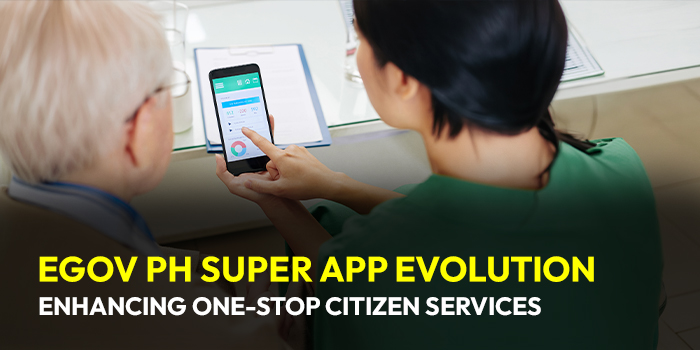
Governments across Southeast Asia are improving how citizens interact with public institutions as expectations for faster and more convenient services continue to rise. In the Philippines, this effort is gaining momentum through the launch of the eGov PH Super App, a platform designed to bring multiple government services together within a single mobile interface.
By connecting different agencies through one system, the initiative simplifies access to permits, payments, identity services, and public programs. As adoption grows, the platform is strengthening the delivery of digital government services, helping both urban and rural communities interact with government systems more efficiently.
The Philippines has placed government modernization at the center of its national development agenda. Over the past decade, policymakers have introduced several programs aimed at expanding digital government services, improving public sector transparency, and enabling citizens to interact with government institutions online.
A key driver of these initiatives is the national digital transformation roadmap, which prioritizes the integration of government systems and the expansion of public service delivery through mobile and online platforms. This strategy recognizes that fragmented digital systems across agencies often lead to duplicated processes, delays, and limited accessibility. By consolidating services within unified digital governance platforms, the government aims to streamline operations and improve the citizen experience.
The Department of Information and Communications Technology (DICT) plays a central role in implementing this strategy. As the lead agency for ICT development, the DICT coordinates with multiple government departments to build interoperable systems, strengthen digital infrastructure, and promote secure public service delivery. The agency also oversees initiatives such as national broadband expansion, government cloud infrastructure, and digital identity programs.
Government investment in ICT modernization has steadily increased in recent years. Budget allocations for digitalization programs now support the expansion of government data centers, cybersecurity frameworks, and cloud-based service delivery systems. These investments are essential for enabling large-scale e-government solutions capable of supporting millions of users nationwide.
The Philippines’ digital governance agenda also aligns with broader regional initiatives within Southeast Asia. Countries across the region are expanding digital public infrastructure to support smart government programs, cross-border digital services, and secure data sharing frameworks. By advancing integrated digital governance platforms, the Philippines is positioning itself within a regional movement toward more connected and citizen-focused government services.
At the center of the country’s modernization efforts is the eGov PH Super App, designed to consolidate public services from multiple government agencies into a single mobile application. Instead of navigating separate websites or visiting different government offices, citizens can now access a wide range of digital government services through one unified platform.
The application functions as a central gateway to various e-government solutions offered by government departments. Once users create an account and verify their identity, they can interact with multiple agencies through the same interface. This integration significantly reduces the complexity traditionally associated with government transactions.
Core features of the platform include:
Citizens can track requests, receive updates, and access important documents directly from their mobile devices.
Several public services are already available through the platform. These include identity verification services linked to national identification programs, applications for permits and licenses, healthcare-related information, social welfare programs, and digital payment options for government fees and taxes. By bringing these services together in one interface, the platform simplifies interactions between citizens and public institutions.
For government agencies, the system also improves operational efficiency. Digital workflows reduce manual paperwork, shorten approval cycles, and enable better monitoring of service delivery. As more agencies integrate their systems into the super app, the platform is expected to become a central hub for national digital governance platforms, providing citizens with consistent access to essential public services.
The success of any national digital platform depends heavily on user adoption and accessibility. Early indicators suggest growing public interest in the eGov PH Super App, supported by rising smartphone usage and expanding internet connectivity across the Philippines.
Mobile connectivity plays an important role in this transformation. With millions of Filipinos accessing the internet primarily through mobile devices, government services delivered through smartphone applications have the potential to reach a large portion of the population. This approach strengthens citizen engagement platforms, allowing government agencies to communicate directly with users through notifications, service alerts, and feedback channels.
Digital service platforms can also deliver measurable improvements in administrative performance. Transactions that previously required multiple office visits can now be completed online, significantly reducing processing times. This improvement not only benefits citizens but also lowers operational costs for government agencies by automating routine processes.
The impact is particularly significant for citizens living in remote areas. For many communities outside major cities, accessing government services often involves traveling long distances to regional offices. By delivering services through mobile platforms, digital government services can reach these populations without requiring physical visits.
Several countries have demonstrated how unified national platforms can strengthen public sector service delivery. Governments in Southeast Asia and other regions have introduced integrated service applications that combine identity verification, financial services, and government transactions within one interface. These models show that well-designed digital governance platforms can improve service accessibility while enhancing public trust in government systems.
Building large-scale e-government solutions requires collaboration between public institutions and technology providers. As the Philippines expands its digital public infrastructure, opportunities are emerging for private sector partners across multiple areas of expertise.
Reliable infrastructure forms the foundation of any national digital platform. Government agencies require scalable cloud environments, secure data storage systems, and high-performance networks capable of supporting millions of users. Technology companies specializing in cloud computing, system integration, and platform management can play an important role in supporting these requirements.
Cybersecurity is another critical component of national digital governance platforms. As more public services move online, protecting sensitive citizen data becomes increasingly important. Solutions for identity verification, fraud detection, encryption, and threat monitoring are essential for maintaining public confidence in digital government systems.
Fintech companies are also contributing to the expansion of digital government services by enabling secure digital payment systems for taxes, permits, and government fees. Integrating financial technologies into public service platforms allows citizens to complete transactions quickly while improving revenue collection efficiency.
Artificial intelligence and advanced analytics represent another area of potential collaboration. AI-powered tools can assist government agencies in analyzing service demand, detecting fraud, and improving operational decision-making.
Across Southeast Asia, government spending on digital transformation continues to grow as countries seek to modernize public sector operations. The Philippines’ efforts to expand citizen engagement platforms and digital public infrastructure therefore present a significant opportunity for technology providers, investors, and policy innovators interested in shaping the future of public service delivery.
As digital government services are expanding, collaboration between policymakers, technology innovators, and industry leaders becomes increasingly important. GOVX.0 Philippines, taking place on 5–6 May 2026 at Manila Marriott Hotel, will convene senior government officials, technology experts, and policy makers to discuss strategies shaping the next phase of digital governance and citizen engagement.
Delegates, sponsors, and thought leaders attending the event will gain valuable insights and partnership opportunities supporting the advancement of e-government solutions in the Philippines.

All rights reserved. © 2026 Tradepass LLP.