
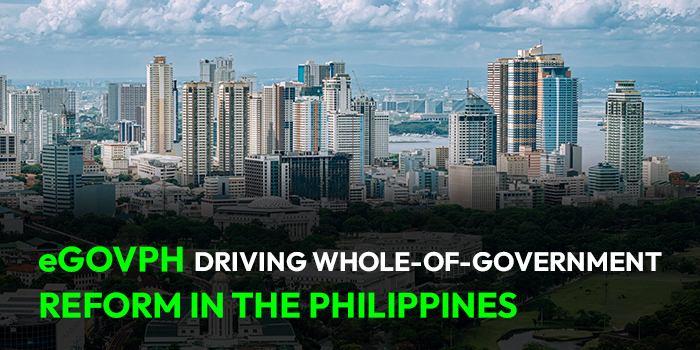
Digital connectivity is reshaping how citizens interact with government institutions, redefining expectations for speed, transparency, and accountability.
Across Southeast Asia, governments are accelerating reforms to deliver seamless public services through technology-driven systems. In the Philippines, specifically, digital government services have become central to national progress, economic resilience, and inclusive development.
Through structured digital transformation initiatives, the country is moving towards integrated e-governance that reduces bureaucracy and improves citizen experience. By aligning innovation with policy reform and infrastructure development, the Philippines is building a modern public sector framework designed to serve people efficiently, securely, and equitably.
The Philippines has positioned government modernization as a cornerstone of national development. Its long-term vision focuses on transparency, interoperability, and citizen-centered governance powered by a robust digital infrastructure.
At its core, such modernization provides a straight-forward direction for reform – bringing together digital innovation, institutional strengthening, and service delivery enhancements within a coordinated whole-of-government framework.
By fostering integration, it ensures that public institutions move forward with shared standards, systems, and objectives – detailed as below.
The administration’s modernization agenda emphasizes:
Digital government services are no longer optional enhancements – they are strategic enablers of economic competitiveness, institutional efficiency, and inclusive national development.
The establishment of the Department of Information and Communications Technology (DICT) under Republic Act No. 10844 marked a turning point in the country’s digital transformation journey. The DICT is mandated to plan, develop, and promote national ICT policies and programs that support government digital transformation.
Complementing this reform is the Ease of Doing Business and Efficient Government Service Delivery Act of 2018, which mandates agencies to simplify procedures, reduce processing time, and eliminate unnecessary steps.
Together, these measures establish a cohesive legal and institutional foundation for integrated, efficient, and citizen-focused e-governance reforms.
Historically, agencies operated independently, leading to duplicated records and fragmented services.
The whole-of-government model replaces these silos with interoperable systems that share data securely. This ensures citizens experience government modernization through seamless, unified, and modern experiences.
The eGovPH Super App is the Philippines’ flagship platform for digital government services.
It represents a significant milestone in e-governance, centralizing multiple public services into a single, user-friendly mobile application.
By providing citizens with convenient, on-demand access to government transactions, it streamlines service delivery, reduces administrative hurdles, and strengthens transparency, efficiency, and accountability across public institutions.
The super app functions as a single gateway where citizens can effortlessly do the following –
This centralized design exemplifies government digital transformation strategies by streamlining interactions across agencies, eliminating redundant processes, and delivering a seamless, citizen-centered service experience.
Integration with the Philippine Identification System enables secure and reliable digital identity verification.
By linking government services to the national ID, authentication becomes faster, more accurate, and less prone to fraud. This not only streamlines transactions for citizens but also strengthens trust, accountability, and confidence in e-governance platforms – paving the way for more advanced, data-driven public services.
The one-stop hub model minimizes the need for multiple websites or in-person visits, allowing citizens to renew licenses, request certifications, apply for IDs, and process payments – all within a single, unified platform.
Such a streamlined system advances the broader ‘Digital Philippines’ vision by:
By incorporating services into an accessible, user-friendly environment, government modernization is increasingly defined by convenience, transparency, and citizen-centricity – and the eGovPH Super App exemplifies this new standard in digital public service delivery.
The eGov Data Exchange (eGovDX) serves as the backbone of interoperability in the Philippines’ digital government ecosystem. It connects disparate government databases and ensures secure, real-time data sharing between agencies – enabling more cohesive, efficient, and accurate public service delivery.
eGovDX links more than 1,200 systems and has processed over 410 million transactions. This scale demonstrates the tangible progress of government digital transformation in the Philippines.
eGovDX currently links over 1,200 government systems and has processed more than 410 million transactions, demonstrating the tangible scale and progress of the country’s government digital transformation efforts. By integrating services across multiple agencies, eGovDX ensures that data flows seamlessly whilst maintaining security and privacy standards.
Through this integrated data exchange, agencies can avoid repetitive documentation requirements. Citizens no longer need to submit the same forms or documents repeatedly – reducing errors, accelerating processing times, and strengthening overall e-governance efficiency.
This approach not only streamlines administrative workflows but also builds citizen trust in digital government services.
The eGovPH Super App, powered by eGovDX, provides mobile access to key services from major institutions, including:
Citizens now save significant time previously spent travelling to government offices and waiting in long queues.
Digital government services minimize paperwork, streamline processes, and offer real-time status tracking, making interactions with public agencies faster, more transparent, and more convenient.
This efficiency not only improves user experience but also enhances overall trust in government services.
Entrepreneurs benefit from faster registration and permit processing, reducing hurdles that previously slowed business operations.
By enabling faster access to licenses and approvals, the digitized systems strengthen the Philippines’ competitiveness, encourage investment, and support inclusive economic growth.
Together, these improvements align with national modernization objectives, demonstrating how digital government services can drive nation-wide economic development.
A strong digital infrastructure is crucial for delivering efficient, inclusive, and secure e-governance.
The Department of Information and Communications Technology (DICT) has therefore implemented several initiatives – as will be stated below – to ensure that citizens across the Philippines can access digital government services seamlessly.
Free Public Internet Access Program
The Free Public Internet Access Program expands connectivity in schools, public hospitals, and government offices, providing citizens with reliable access to e-government services.
Such an initiative ensures broader participation in digital government services, especially for students, healthcare recipients, and underserved communities.
Satellite-Based Wi-Fi Deployment in Rural Areas
To further address connectivity gaps, DICT has deployed satellite-based Wi-Fi networks in remote regions. These installations ensure that even rural communities can participate in the country’s digital transformation journey, reducing geographic barriers to access.
Case Example: Aurora Province & Central Luzon
Deployments in the Aurora Province and across Central Luzon highlight the impact of strong infrastructure investments.
Residents in these areas now have reliable internet access, enabling them to utilize digital services such as online applications, certifications, and government portals which were previously inaccessible – contributing to greater transparency and engagement with digital government services.
Despite progress, gaps in internet access persist in geographically isolated and rural areas.
Limited connectivity restricts citizen participation in e-governance and can increase inequalities in accessing essential services. Targeted infrastructure investments and community-based digital programs are therefore essential to bridge this divide.
Limited digital literacy can slow the adoption of modern government systems.
Senior citizens, rural populations, and users unfamiliar with mobile platforms may face difficulties navigating digital services, highlighting the need for inclusive training, awareness campaigns, and user-friendly interfaces.
Centralized digital platforms manage vast amounts of sensitive personal and financial data, making robust security frameworks indispensable.
Adherence to privacy regulations, ongoing staff training, and resilient system architecture are therefore critical to protecting information assets and preserving public trust in e-governance services.
In an era where digital platforms are increasingly the backbone of public services, building an inclusive and secure digital government ecosystem is an urgent necessity.
Sustainable e-governance depends on a robust digital infrastructure, strong connectivity, and widespread digital literacy to ensure every citizen can participate and benefit.
At the same time, strengthening cybersecurity standards, transparent data governance, and collaborative public-private partnerships are essential to protect sensitive information, uphold democratic values, and earn the trust of citizens in digital government services.
It is in response to this urgent and far-reaching transformational need, that GOVX.O in the Philippines emerges as a strategic platform where the aspirations for inclusive, efficient, and secure digital governance are met and translated into actionable outcomes that drive measurable public sector impact.
Positioned at the centre of the Philippines’ e-governance agenda, the summit convenes senior government officials, thought leaders, policy makers, and technology innovators to share insights, forge strategic partnerships, and accelerate digital transformation across the public sector.
At GOVX.0, participants gain access to:
By uniting visionaries and practitioners around these priorities, GOVX.0 not only highlights why inclusive, secure digital governance matters, but also how strategic solutions and collaborations can help government bodies deliver better public services – enhancing trust and thereby, creating a more inclusive, citizen-centric digital future for the Philippines.
Event Details
Date: 5 – 6 May, 2026
Venue: Manila Marriott Hotel, Philippines

All rights reserved. © 2026 Tradepass LLP.